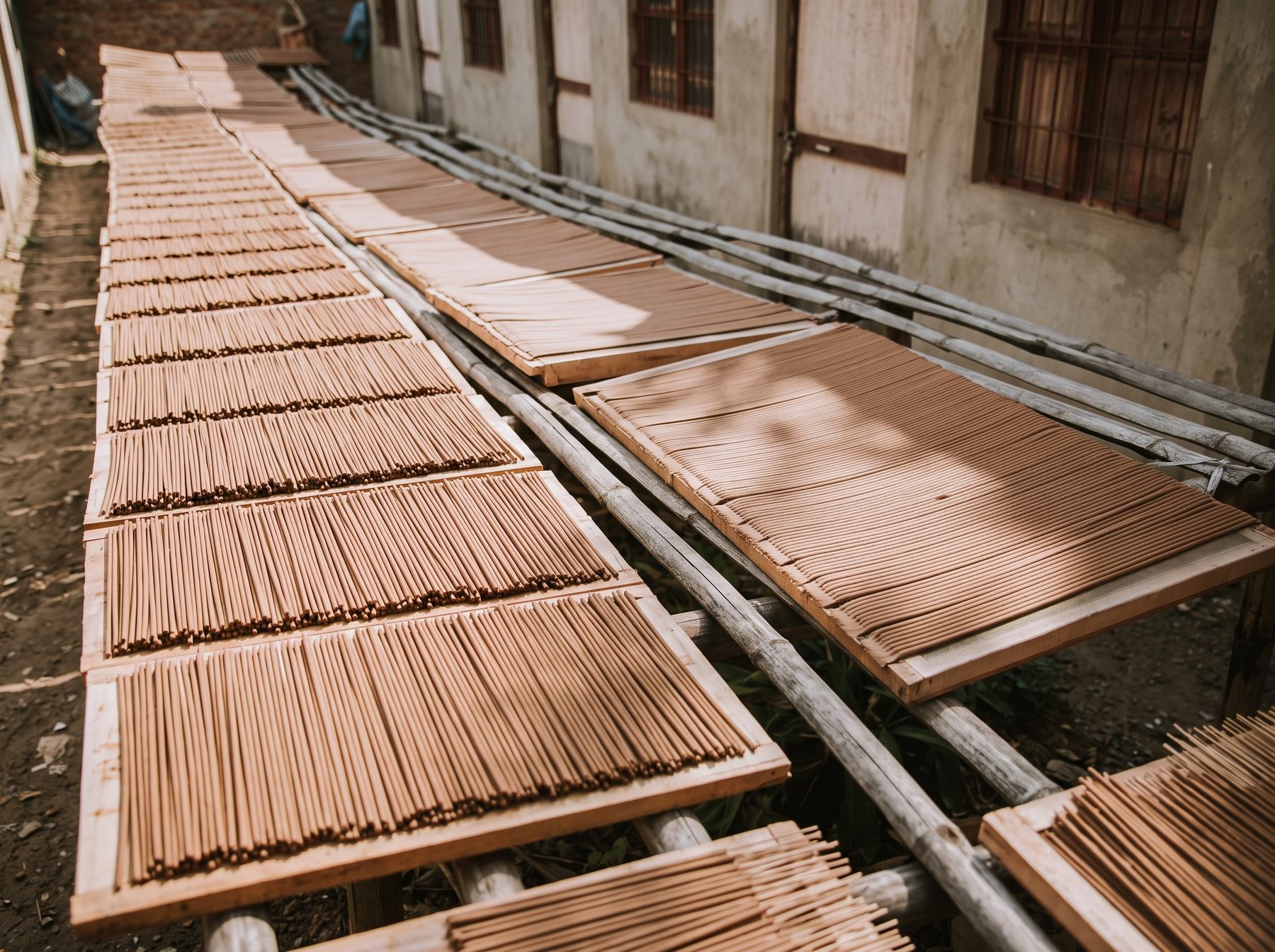
Wer je ein billiges Räucherstäbchen angezündet hat, kennt das Ergebnis: ein süßlich-schwerer Geruch, dichter Rauch, ein schwarzer Rand am Halter. Das liegt selten am Duft. Meistens liegt es am Stäbchen selbst.
Wie die meisten Räucherstäbchen gebaut sind
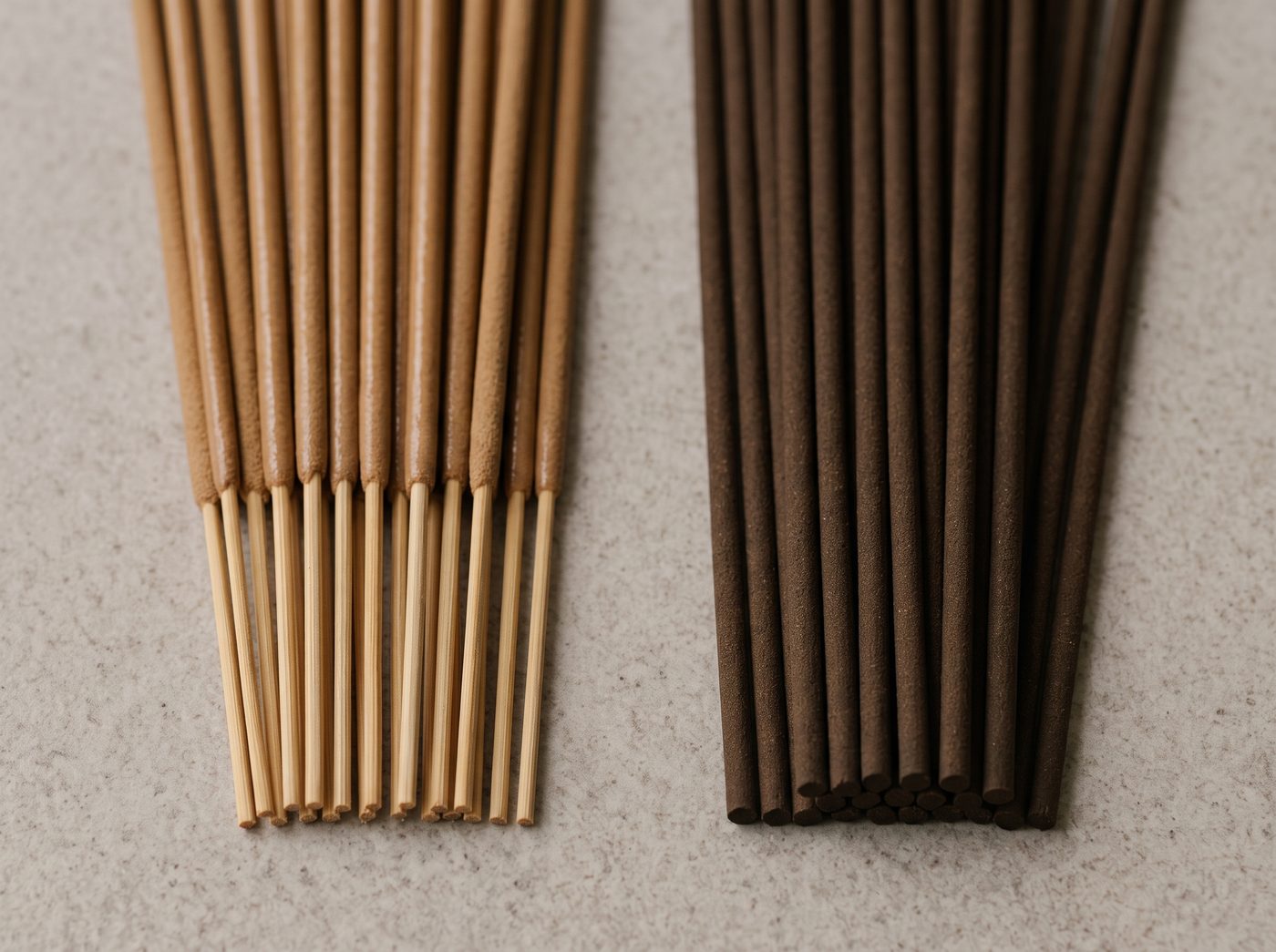
Das typische Räucherstäbchen besteht aus einem dünnen Bambusstab, der mit einer Paste aus Holzmehl und Bindemittel ummantelt wird. Danach wird der Rohling oft in eine Mischung aus Duftöl und Lösungsmittel getaucht. Ein häufig verwendetes Lösungsmittel ist DPG (Dipropylenglykol). Es hilft, synthetische Duftöle gleichmäßig zu verteilen und eventuell sie günstig zu machen.
Das Problem ist schlicht: Beim Anzünden verbrennt nicht nur der Duft. Es verbrennt auch den Bambus. Das Holz des Kerns erzeugt zusätzlichen Rauch, der mit dem eigentlichen Aroma nichts zu tun hat. Und synthetische Duftstoffe wirken beim Verbrennen oft schwerer und aufdringlicher, als sie in der Flasche riechen.
Was ein Far Shore Stäbchen ausmacht
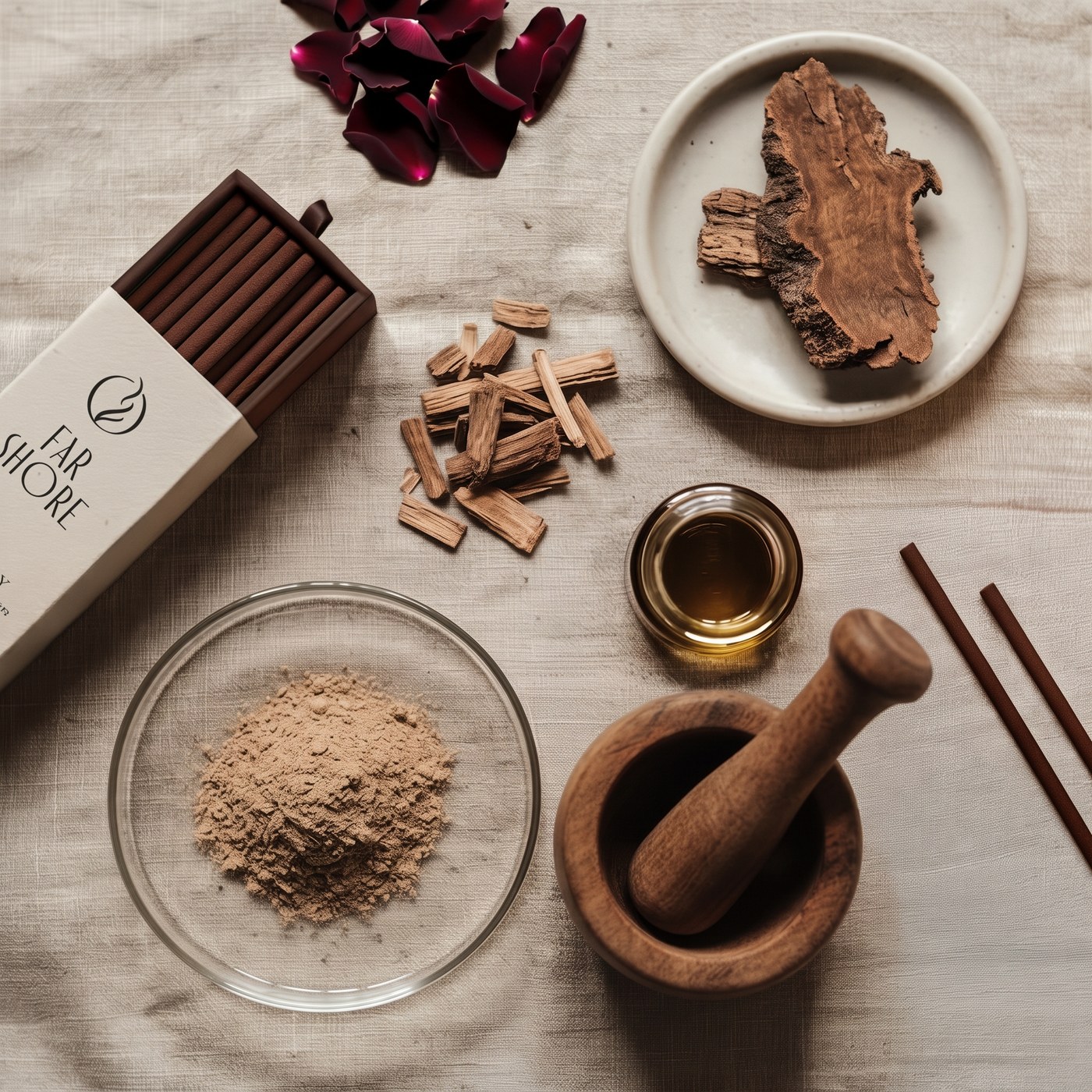
Ein Far Shore Räucherstäbchen hat keinen Kern. Es besteht vollständig aus dem, was du riechen sollst:
- Natürliche Holzpulver – die Basis, die gleichmäßig glimmt
- Pflanzenharze – für Tiefe und einen langen, ruhigen Nachklang
- Reine ätherische Öle – für die Duftnoten jeder Landschaft
Kein Bambus. Kein DPG. Keine synthetischen Duftöle.
Weil nichts anderes verbrennt als das Duftmaterial selbst, bleibt der Rauch fein und hell. Der Duft steigt auf und verteilt sich im Raum, statt schwer darin zu hängen. Und am Ende bleibt nichts zurück als ein feiner Strich Asche.
Keine neue Idee – eine alte
Kernloses Räucherwerk ist keine Erfindung unserer Zeit. In Japan und China ist es seit Jahrhunderten die bevorzugte Form für Tempel, Teezeremonie und Meditation. Der Bambuskern kam später als Abkürzung für die Massenproduktion. Wir gehen den Weg einfach zurück.
So erkennst du echtes kernloses Räucherwerk
- Kein Holzstab am Ende. Das Stäbchen ist von Anfang bis Ende einheitlich.
- Matte Oberfläche. Glänzende oder ölige Stäbchen deuten auf viel zugesetztes Duftöl hin.
- Heller, feiner Rauch. Dichter, dunkler Rauch ist ein Hinweis auf Füllstoffe.
- Transparente Zutaten. Seriöse Hersteller nennen, woraus ihr Räucherwerk besteht.
Ein ehrliches Wort zum Rauch
Jedes Räucherwerk erzeugt Rauch – auch unseres. Deshalb empfehlen wir, beim Räuchern gelegentlich zu lüften und nie in einem geschlossenen, kleinen Raum mehrere Stäbchen hintereinander zu brennen. Unser Versprechen ist nicht, dass Rauch harmlos ist. Unser Versprechen ist, dass du genau weißt, was brennt.
Anyone who has lit a cheap incense stick knows the result: a heavy, sweet smell, thick smoke, a black ring on the holder. That's rarely the fragrance's fault. Usually it's the stick itself.
How most incense is made
The typical incense stick is a thin bamboo rod coated in a paste of wood dust and binder. The blank is then often dipped in a blend of fragrance oil and solvent. A common solvent is DPG (dipropylene glycol). It spreads synthetic fragrance evenly — and keeps it cheap.
The problem is simple: when you light it, the fragrance isn't the only thing burning. So is the bamboo. The core adds smoke that has nothing to do with the aroma. And synthetic fragrance often reads heavier and more insistent when burned than it does in the bottle.
What makes a Far Shore stick different
A Far Shore stick has no core. It is made entirely of what you're meant to smell:
- Natural wood powders — the base, which smoulders evenly
- Plant resins — for depth and a long, quiet finish
- Pure essential oils — for the notes of each landscape
No bamboo. No DPG. No synthetic fragrance oils.
Because nothing burns but the aromatic material itself, the smoke stays fine and pale. The scent rises and moves through the room instead of hanging in it. And what remains is a single thin line of ash.
Not a new idea — an old one
Coreless incense isn't a modern invention. In Japan and China it has long been the preferred form for temples, tea ceremony and meditation. The bamboo core came later — a shortcut for mass production. We simply walk the path back.
How to recognise true coreless incense
- No wooden stem at the end. The stick is uniform from tip to tip.
- A matte surface. Glossy or oily sticks suggest a lot of added fragrance oil.
- Pale, fine smoke. Thick, dark smoke points to fillers.
- Transparent ingredients. Serious makers tell you what their incense contains.
An honest word about smoke
All incense makes smoke — ours too. So we suggest airing the room now and then, and never burning several sticks back to back in a small, closed space. Our promise isn't that smoke is harmless. Our promise is that you know exactly what is burning.
Entdecke, welche Landschaft zu dir passt.
Discover which landscape suits you.